
Description
We are delighted to welcome you to the second edition of this timely and thought-provoking symposium, where we gather to explore the evolving role of generative AI in shaping the future of education and research. This year, we turn our focus to the paradoxes emerging within management education, an area where the promise of AI meets the complexity of human judgment, ethics, and leadership.
As generative AI tools become increasingly integrated into academic and professional environments, they offer unprecedented opportunities for innovation, efficiency, and personalised learning. Yet, they also raise critical questions, such as: What are the limits of what AI can teach? Can it truly foster the nuanced thinking, emotional intelligence, and ethical reasoning that management education aspires to cultivate?
This symposium invites educators, researchers, students, and practitioners to engage in a rich dialogue around these questions. Through keynote talks, panel discussions, and collaborative sessions, we will examine not only what AI can do, but also what it perhaps should not, or cannot, replace in the learning process.
By bringing together diverse perspectives in both in-person and hybrid formats, we aim to foster meaningful connections and spark new ideas that will shape the future of management education in an AI-augmented world.
We look forward to your insights, your questions, and your contributions to this important conversation.
Symposium Timeline:
Registration deadline: 3rd April 2026
NOTE: Although we endeavour to run all events as advertised, BAM reserves the right to cancel any event if, for example, there are not enough people to justify running the event or if other significant unforeseen circumstances arise. Please be aware that delegates are always responsible for ensuring their own travel and accommodation against cancellation, and the British Academy of Management is not able to reimburse anyone for these under any circumstances.
Provider Information
BAM Knowledge and Learning and Research Methodology Special Interest Groups
Who Should Attend?
The event speaks to All Sections, as detailed in the BAM Framework
This symposium is ideal for educators, researchers, and practitioners in management, education, and technology who are exploring the role of generative AI in shaping learning and leadership. It also welcomes students, policymakers, and industry professionals interested in the ethical, pedagogical, and practical boundaries of what AI can—and cannot—teach.
Keynote Speakers

Professor Mark Saunders
Mark N.K. Saunders is Emeritus Professor of Business Research Methods, holding visiting professorships at the Gordon Institute of Business Science (University of Pretoria), and the University of Worcester.
His textbook, Research Methods for Business Students (9th edition), was ranked the world's 10th most cited article or book in Business and Economics by the Financial Times. His research focuses on research methods, the human resource aspects of change management (particularly trust), SME success, and pedagogic practice. He has co-authored and/or edited over 30 books - including How to Keep Your Doctorate on Track (2026, 3rd edition) - and published over 150 research articles and chapters in leading journals, his research has been cited over 120,000 times.
He serves as a consulting editor for the International Journal of Management Reviews, European Editor for the Service Industries Journal and is on the editorial boards of the Journal of Trust Research, the European Journal of Management and Human Resource Development Quarterly. Having formally retired, Mark lives with his partner and their two children in South Africa’s Western Cape spending some of his time undertaking researcher development, writing and researching.

Dr Maria Jerez Jerez
Dr Maria Jerez Jerez is a Senior Lecturer in International Business at the University of Bedfordshire. Her work focuses on responsible AI adoption, digital transformation, and emerging business models in tourism and hospitality. She has published in leading journals such as the International Journal of Hospitality Management and the International Journal of Contemporary Hospitality Management, and collaborates with industry through live consultancy projects and AI seminars initiatives at UCL, Cambridge, and University Las Palmas (Spain).
Jerez-Jerez, M.J. (2025). A study of employee attitudes towards AI and its effect on SDGs and non-financial performance in independent hotels, International Journal of Hospitality Management, 124, 103987.
Jerez-Jerez, M.J., Castillo, C.L.A., & Sevilla-Sevilla, C. (2025). Exploring the impact of dark kitchens on community quality-of-life: local biopolitics, disposition, integrity, and lobbying, International Journal of Hospitality Management, 130, 104231.
Jerez-Jerez, M.J., Castillo, L., & Aguiar-Castillo, L. (2025). The Role of Artificial Intelligence in the Tourism and Hospitality Sector, Taylor & Francis.
Jerez-Jerez, M.J., Ahmed, S., & Peter, S. (2025). How Can We Optimise Co-Living for the Digital Nomad Era? International Journal of Contemporary Hospitality Management.

Sue Attewell
Sue Attewell co-leads the Artificial Intelligence team at Jisc, where she is actively involved in advancing AI maturity within member institutions. Jisc plays a critical role by providing Advice & guidance, Training, Community and Advocacy & collaboration.
Sue leads on Community and Training & Consultancy. With a strong understanding of student and staff concerns related to generative AI, Sue is dedicated to ensuring that AI adoption in education is inclusive.
Professor Savvas Papagiannidis
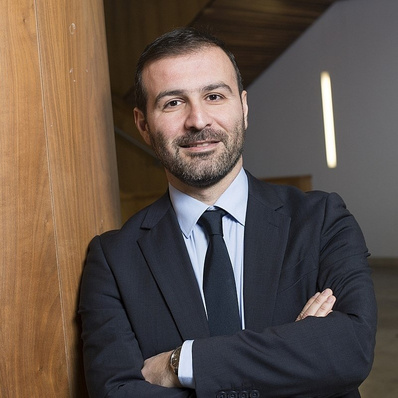
Prof Savvas Papagiannidis is Professor of Information Systems, Digital Innovation & Transformation at Newcastle University Business School. His research interests revolve around electronic business and its various sub-domains.
More specifically, his research aims to inform our understanding of how e-business technologies affect the social and business environment, organisational strategies and business models, and how these are implemented in terms of functional innovations. His work puts strong emphasis on innovation, new value creation and exploitation of entrepreneurial opportunities, within the context of different industries.
Savvas has served as a track/SIG Chair for Ebusiness & Information Management, as a BAM Council Member and on the BAM Executive as the co-Vice Chair for SIGs. He also hosted the 2016 BAM Conference in Newcastle.

Prof Xue Zhou
Prof Xue Zhou is Professor of AI in Business Education and Associate Dean of Education at the University of Leicester.
A PFHEA and incoming BAM Council (MKE) member from January 2026, Xue leads institution-wide curriculum transformation, assessment innovation and staff AI literacy. Her practice focuses on implementing Peer-Led Team Learning (PLTL) at scale, augmented by ethical GenAI to improve engagement, attainment and assurance of learning.
She is a core team member of an Advance HE CATE award for PLTL, and her work has been recognised by sector awards including BAM Education Practice (HC), QS Reimagine (shortlist) and institutional excellence awards.

Dr Tracey Tuten
AI features are arriving in established QDA platforms like NVivo and Atlas.ti, but they are largely designed to speed up familiar processes rather than create new ones.
This session explores what becomes possible when qualitative analysis is built around AI from the ground up. Using CoLoop, an AI-native platform purpose-built for qualitative analysis, Dr. Tuten will briefly situate these tools against traditional QDA approaches before moving into a live demonstration — walking through transcription, guided analysis, statement-level coding, and conversational querying using real project data.
Attendees will see how this workflow departs fundamentally from legacy tools, while remaining surprisingly intuitive for researchers already accustomed to working with large language models.
The session aims to leave participants with a clear sense of what AI-native QDA looks like in practice and why it may be far more accessible than the qualitative analysis methods they currently use.

Jack Bowen
Jack Bowen is the Founder and CEO of CoLoop, an AI-powered analysis platform for qualitative research that helps insight and strategy teams move from data to decision faster and with greater confidence. A Y Combinator (S21) alumnus, he previously founded and led Genei, a venture-backed startup that built AI tools to accelerate the research process, giving him deep, practical experience in applying advanced models to real-world knowledge work.
Trained in materials engineering, Jack spent his master’s year working with lasers to explore novel hosts for qubits, an early grounding in complex systems that now informs his approach to building robust, trustworthy AI for researchers. At CoLoop, he focuses on collaborative AI that augments, rather than replaces, the judgement of qualitative experts, with particular strength in challenging domains such as B2B, technical categories, and regulated industries.
Based in London, Jack works with global insights and consulting teams to integrate AI into their qualitative workflows, helping them analyse unstructured data at scale while maintaining nuance, rigour, and methodological integrity. He is a regular speaker at industry events, including IIEX AI and Qual360, where he shares practical lessons on AI-enabled qualitative research and the future of human–machine collaboration in insight generation.

Yuefeng Sun
Yuefeng Sun is Europe Academy Lead and Cloud Architect at Alibaba Cloud, where he drives AI, cloud, and data education initiatives across European universities and enterprises. With nearly two decades of experience spanning generative AI, cloud computing, and enterprise analytics, he has led large-scale technology programs for Fortune 500 and CAC 40 organizations, including Société Générale, Air Liquide, VINCI, EDF, and LVMH.
Before joining Alibaba Cloud, Yuefeng held senior solution architecture and project leadership roles at Tableau Software (Salesforce) and Capgemini, specializing in data platforms, business intelligence, and performance management (costing model and budgeting). He is widely recognized for bridging advanced AI technologies with business strategy, education, and organizational transformation.
Yuefeng regularly delivers executive briefings, academic lectures, and professional training on generative AI, cloud adoption, and AI-enabled learning, and actively collaborates with European business schools on the future of AI in management and education.

Dr Viktor Dorfler
Dr Viktor Dorfler is a scholar, consultant, teacher, and speaker. As a practitioner, he spearheaded the development of AI software, while his scholarly research focuses on talent, creativity, intuition, and the grandmaster-apprentice relationship. Viktor has conducted in-depth open-ended interviews with 20 top scientists, including 17 Nobel Laureates, in order to understand the thinking of scientists at the highest level of mastery. His book What Every CEO Should Know About AI has just been published by the Cambridge University Press, prior to which he has co-edited the Handbook of Research Methods on Creativity with Marc Stierand.
Viktor's relevant methodological publications:
- Viktor Dörfler & Colin Eden (2014) Research on Intuition using Intuition, Sinclair, Marta (Ed.) Handbook of Research Methods on Intuition, Edward Elgar Publishing, Cheltenham, UK, 264-276. DOI: 10.4337/9781782545996.00031
- Viktor Dörfler & Marc Stierand (2021) Bracketing: A Phenomenological Theory Applied Through Transpersonal Reflexivity, Journal of Organizational Change Management, 34(4): 778-793. DOI: 10.1108/JOCM-12-2019-0393
- Obafemi Olekanma, Viktor Dörfler & Farhad Shafti (2022) Stepping into the Participants' Shoes: The Trans-Positional Cognition Approach (TPCA), International Journal of Qualitative Methods, 21: 1-15. DOI: 10.1177/16094069211072413
- Marc Stierand & Viktor Dörfler (2014) Researching Intuition in Personal Creativity, Sinclair, Marta (Ed.) Handbook of Research Methods on Intuition, Edward Elgar Publishing, Cheltenham, UK, 249-263. DOI: 10.4337/9781782545996.00030

Dr Fariba Darabi
Dr Fariba Darabi is an experienced management educator with particular expertise in the fields of Entrepreneurship, International Business, and Research Methods. She held Visiting Professorship at University of Capitole 1 (Toulouse, France); committee member for the EFMD doctoral programmes conference; serves on the British Academy of Management’s Council as a Management Knowledge and Education Committee member, co-leading the ‘Education-focussed Professor’ programme, and Co-Chair for the Research Methodology Special Interest Group.
Fariba is UK Council for Graduate Education-recognised research supervisor, with doctoral completions and external examination experience. Her primary research interests are Engaged Scholarship, SME Entrepreneurship, and Global Supply Chain Management; Research methods is her secondary research interest, for which she is authoring a textbook. Fariba is an engaged scholar who has successfully secured research grants to ‘Harness AI and Generative AI for Welsh SMEs’ Innovation’, acting as Principal Investigator, and is co-investigating a ‘AI-driven innovation in UK SMEs’ project funded by ISBE’s RAKE fund. She has also been successful in attracting UKRI funds for a KTP project. She has published in World Class Journals such as the International Journal of Entrepreneurial Behaviour Research and Human Resource Management Journal, alongside authoring chapters in edited research volumes.
Please visit Fariba’s full profile here: https://www.bangor.ac.uk/staff/bbs/fariba-darabi-658619/en

Mark Henderson
Mark Henderson BEng (Hons) MBA is Chief Strategy and AI Officer at ABP Consultancy, and co-founder and Director of the ABP School of Automation. He has 15 plus years delivering board approved transformation in regulated financial services, plus earlier engineering and operations leadership. He builds enterprise financial models, board business cases, and value governance that turn strategy into funded delivery and tracked outcomes.
Mark has led large scale outsourcing and offshoring, operating model redesign, TUPE, and multiyear cost reduction programmes. He shapes and governs enterprise AI and automation adoption across banking, healthcare, and professional services. His work focuses on measurable value, faster time to value, and controlled delivery risk.
Mark is also a PhD researcher and practitioner participant at the University of Strathclyde, using Research Oriented Action Research, SODA, causal mapping, and Strategyfinder to examine why enterprises struggle to scale AI in hybrid working environments, and what senior leaders must do to change outcomes.

Dr Xule Lin
Xule Lin recently completed his PhD at Imperial College London, supervised by Erkko Autio, Ying-Ying Hsieh, and Kevin Corley. His research examines how organizations coordinate when humans and algorithms jointly shape outcomes — from decentralized governance to human-AI collaboration in qualitative research.
With Kevin Corley, he writes the LOOM essay series to explore how social science researchers can engage with AI without giving up the judgment and epistemic responsibility. He joins SKEMA Business School's Centre for Artificial Intelligence in August 2026.
Sponsors


Programme
Full Programme
09:00 – 09:30: Opening Remarks: Welcome note from organisers; Introduction to the Symposium’s objectives and goals
09:50 – 10:50: Morning Keynote: Prof Mark Saunders - Use of AI (Online)
10:50 – 11:00: Networking Break
11:00 - 12:00: Generative AI and the Paradoxes in Management Education – Panel Discussion
Dr Maria Jerez Jerez (University of Bedfordshire), Sue Attwell (JISC), Professor Savvas Papagiannidis (University of Newcastle) and Professor Xue Zhou (University of Leicester)
12:00 - 13:10: Parallel Presentations
Online
Teaching
Research
13:10 - 14:30: Lunch
13:45 - 14:30: Lunchtime Keynotes
Beyond Automation: How AI Native Tools Are Redefining Qualitative Data Analysis - Dr Tracey Tuten, Radius Tech and Jack Bowen, CoLoop
Online Keynote 2: Yuefeng Sun
14:30 - 15:10: Parallel Presentations
Online
Teaching
Research
15:15 - 16:15: Generative AI and the Paradoxes in Management Research – Panel Discussion
Dr Viktor Dörfler (University of Strathclyde), Dr Fariba Darabi (Bangor University), Mark Henderson (ABP Consultancy), Dr Xule Lin (Imperial College London)
16:15 - 16:30: Closing Remarks and Symposium Conclusion
16:30: Optional Networking and Wine Tasting
Benefits of Attendance
Benefits of Attendance
Engage with Leading Thinkers: Gain insights from experts at the forefront of AI, education, and management who are shaping the future of learning and leadership.
Explore Critical Questions: Delve into the ethical, pedagogical, and practical boundaries of what generative AI can—and cannot—teach in management education.
Network Across Disciplines: Connect with educators, researchers, students, and industry professionals from diverse backgrounds in both in-person and hybrid formats.
Discover Innovative Practices: Learn about cutting-edge tools, case studies, and strategies for integrating AI meaningfully into educational and research contexts.
Shape the Conversation: Contribute your voice to a timely and evolving dialogue that will influence how AI is understood and applied in education and beyond.
Facilitators




Facilitators
Dr Alexander K Kofinas
Dr Alexander K Kofinas is a scholar, teacher, and manager. He is an academic with a multicultural experience and multidisciplinary education. As a manager he leads the Graduate School of Business at the University of Bedfordshire. His research is focussed on management education, with a particular emphasis on innovative pedagogies and their impact on student engagement and assessment practice.
Recent Publications in management education include the following:
- Kofinas, A.K., Tsay, C.H.H. and Pike, D., 2025. The impact of generative AI on academic integrity of authentic assessments within a higher education context. British Journal of Educational Technology. DOI: https://doi.org/10.1111/bjet.13585
- Kofinas, A.K., Schwabenland, C. and Tsay, C., 2025. What Makes a Duck a Duck? A LEGO® Serious Play® Exercise Demonstrating the Contradictions in Managing Diversity, Equity, and Inclusion. Management Teaching Review. DOI: https://doi.org/10.1177/23792981251348401
- Schwabenland, C. and Kofinas, A., 2023. Ducks, elephants and sharks: Using LEGO® Serious Play® to surface the ‘hidden curriculum’ of equality, diversity and inclusion. Management Learning, 54(3). DOI: https://doi.org/10.1177/13505076231166850
- Kofinas, A.K. and Tsay, C.H.H., 2021. In favor of large classes: A social networks perspective on experiential learning. Journal of management education, 45(5), pp.760-785. DOI: https://doi.org/10.1177/10525629211022819
Dr Viktor Dorfler
Dr Viktor Dorfler is a scholar, consultant, teacher, and speaker. As a practitioner, he spearheaded the development of AI software, while his scholarly research focuses on talent, creativity, intuition, and the grandmaster-apprentice relationship. Viktor has conducted in-depth open-ended interviews with 20 top scientists, including 17 Nobel Laureates, in order to understand the thinking of scientists at the highest level of mastery. His book What Every CEO Should Know About AI has just been published by the Cambridge University Press, prior to which he has co-edited the Handbook of Research Methods on Creativity with Marc Stierand.
Viktor's relevant methodological publications:
- Viktor Dörfler & Colin Eden (2014) Research on Intuition using Intuition, Sinclair, Marta (Ed.) Handbook of Research Methods on Intuition, Edward Elgar Publishing, Cheltenham, UK, 264-276. DOI: 10.4337/9781782545996.00031
- Viktor Dörfler & Marc Stierand (2021) Bracketing: A Phenomenological Theory Applied Through Transpersonal Reflexivity, Journal of Organizational Change Management, 34(4): 778-793. DOI: 10.1108/JOCM-12-2019-0393
- Obafemi Olekanma, Viktor Dörfler & Farhad Shafti (2022) Stepping into the Participants' Shoes: The Trans-Positional Cognition Approach (TPCA), International Journal of Qualitative Methods, 21: 1-15. DOI: 10.1177/16094069211072413
- Marc Stierand & Viktor Dörfler (2014) Researching Intuition in Personal Creativity, Sinclair, Marta (Ed.) Handbook of Research Methods on Intuition, Edward Elgar Publishing, Cheltenham, UK, 249-263. DOI: 10.4337/9781782545996.00030
Dr Fariba Darabi
Dr Fariba Darabi is an experienced management educator with particular expertise in the fields of Entrepreneurship, International Business, and Research Methods. She held Visiting Professorship at University of Capitole 1 (Toulouse, France); committee member for the EFMD doctoral programmes conference; serves on the British Academy of Management’s Council as a Management Knowledge and Education Committee member, co-leading the ‘Education-focussed Professor’ programme, and Co-Chair for the Research Methodology Special Interest Group.
Fariba is UK Council for Graduate Education-recognised research supervisor, with doctoral completions and external examination experience. Her primary research interests are Engaged Scholarship, SME Entrepreneurship, and Global Supply Chain Management; Research methods is her secondary research interest, for which she is authoring a textbook. Fariba is an engaged scholar who has successfully secured research grants to ‘Harness AI and Generative AI for Welsh SMEs’ Innovation’, acting as Principal Investigator, and is co-investigating a ‘AI-driven innovation in UK SMEs’ project funded by ISBE’s RAKE fund. She has also been successful in attracting UKRI funds for a KTP project. She has published in World Class Journals such as the International Journal of Entrepreneurial Behaviour Research and Human Resource Management Journal, alongside authoring chapters in edited research volumes.
Please visit Fariba’s full profile here: https://www.bangor.ac.uk/staff/bbs/fariba-darabi-658619/en
Dr Natasha Lawlor-Morrison
Dr Natasha Lawlor-Morrison is a lecturer at the University of Greenwich who recently completed her PhD, entitled ‘Understanding and developing learning agility’ was awarded without corrections in August 2023. Natasha has a broad range of research interests relating to pedagogy, learning, and technology and is recognised as a Chartered Psychologist by the British Psychology Society.
Natasha is a member of several research groups at the University of Greenwich: the Networks and Urban Systems Centre (NUSC), the Centre for Research on Employment and Work (CREW), Scholarship Excellence in Business Education (SEBE) and the AI & Data Science Network (part of the Turing university Network).
Natasha has co-authored book chapters and conference presentations on the use of technology, and the use of AI by management education students.
Dr Candice Chow
Dr. Candice Chow is the Program Director of The Foresight Lab and an Assistant Professor of Strategic Management at DeGroote School of Business. Prior to becoming a full-time academic in 2019, Candice held various senior management positions cross-continents for over twenty-five years.
Candice earned her DBA at the Henley Business School, UK and received an MBA at the Ivey School of Business, Western University, Canada. A graduate of the Directors’ College, McMaster University, she also holds the Chartered Financial Analyst designation and a Bachelor in Mechanical Engineering at the Imperial College, UK.
Dr Crystal Tsay
Dr Crystal Tsay is an Associate Professor of Management (Teaching & Education) at University of Greenwich (UoG). She is also a Senior Fellow of Advance HE and a module leader for Managing Across Cultures.
Crystal has published in journals such as Journal of Management Education, Computer and Education, and Journal of Computer Assisted Learning. Based on her two research agendas, motivational virtual learning environment (VLE) design and cross-cultural management education, Crystal has also led award-winning teaching-enhancement projects. In 2018-19, Crystal led a project funded by UK Council for International Student Affairs to support the development of psychological and social capital for Chinese Direct Entry students. Her team won the Highly Commended Paul Webley Innovation for International Education award. In addition, Crystal’s work on gamification in VLE provided the University with evidence-based recommendations that were implemented on Personal and Professional Development modules. She then won the UoG Excellence in Pedagogical Research Award in 2019 and Most Innovative Use of Technology for Online Learning award in 2021.
Crystal is currently a member of UoG’s closing BAME Awarding Gap project group. She is leading a sub-project to understand student learning journeys, hoping to draw on student lived experience to inform strategy to address the BAME awarding gap.
Dr Maria Jerez Jerez
Dr Maria Jerez Jerez is a Senior Lecturer in International Business at the University of Bedfordshire. Her work focuses on responsible AI adoption, digital transformation, and emerging business models in tourism and hospitality. She has published in leading journals such as the International Journal of Hospitality Management and the International Journal of Contemporary Hospitality Management, and collaborates with industry through live consultancy projects and AI seminars initiatives at UCL, Cambridge, and University Las Palmas (Spain).
Jerez-Jerez, M.J. (2025). A study of employee attitudes towards AI and its effect on SDGs and non-financial performance in independent hotels, International Journal of Hospitality Management, 124, 103987.
Jerez-Jerez, M.J., Castillo, C.L.A., & Sevilla-Sevilla, C. (2025). Exploring the impact of dark kitchens on community quality-of-life: local biopolitics, disposition, integrity, and lobbying, International Journal of Hospitality Management, 130, 104231.
Jerez-Jerez, M.J., Castillo, L., & Aguiar-Castillo, L. (2025). The Role of Artificial Intelligence in the Tourism and Hospitality Sector, Taylor & Francis.
Jerez-Jerez, M.J., Ahmed, S., & Peter, S. (2025). How Can We Optimise Co-Living for the Digital Nomad Era? International Journal of Contemporary Hospitality Management.
Venue
Venue
University of Greenwich,
Queen Anne Court,
Old Royal Naval College,
Park Row,
London
SE10 9NW
Event Fees
Event Fees
In-Person
BAM Member: £60
BAM Student Member: £30
Non-Member: £90
Virtual
BAM Member: £30
BAM Student Member: £20
Non-Member: £60
If you are booking multiple paid events as a Non-Member, it may be cheaper for you to purchase a BAM Membership as nearly all BAM Events are free or at a discounted rate for Members.
For more information, please visit BAM Membership
Registration closes on 3rd April 2026 at 23:59 BST
Contact
Contact
Dr Alexander K Kofinas: [email protected]
Dr Natasha Lawlor-Morrison: [email protected]
Please contact the BAM Office at [email protected] with any general queries.
Payment and Cancellation Policy
Payment for the event must be received before the start date of the event concerned. Access will not be permitted to the event if full payment has not been received.
Cancellations
-
Cancellations received within 14 days of booking your place on the event will receive a full refund.
-
Cancellations received after the 14-day cancellation period and later than 14 days before the start date of the event will not be eligible for a refund.
-
Although we endeavour to run all events as advertised, BAM reserves the right to cancel any event if, for example, there are not enough people to justify running the event or if other significant unforeseen circumstances arise. Please be aware that delegates are always responsible for ensuring their own travel and accommodation against cancellation, and the British Academy of Management is not able to reimburse anyone for these under any circumstances.
To cancel a booking a cancellation request must be submitted via your BAM Account, to do this:
- Go to your BAM Account
- Click 'My Events'
- Under 'Upcoming Events' will be the booking, please click Cancel Booking
- Follow the steps and complete the request