
Webinar Description
We are pleased to invite you to an engaging and transdisciplinary panel discussion on "Orchestrating Circular Ecosystems: A Symphony or a Cacophony?". This event brings together academics and practitioners from diverse geographies, places, and contextual settings to explore how circular ecosystems function, interact, and evolve and how academia and the world of practice interact better to orchestrate and coordinate circular ecosystems. This collaboration is needed in order to bridge the gap between theoretical research and real-world implementation.
Circular ecosystems are increasingly recognized as fundamental to achieving circularity at local, national, and global levels, yet they are shaped by distinct geographical and spatial scales. As Aarikka-Stenroos et al. (2021) highlight, ecosystems vary in focus, whether on value exchange, material flows, or knowledge creation, and their orchestration depends on how these elements interact within a given place. Ecosystem scholars often add another metaphor of 'orchestrating' into this literature (Sandberg 2023), drawing from music to illustrate the coordination required among diverse stakeholders in a circular ecosystem.
In this analogy, the maestra(o) represents the orchestrator—often a lead firm, policymaker, or governance body—who ensures alignment and synergy amongst various stakeholders. However, orchestration is not universal; it is deeply shaped by place and geography, as circular ecosystems emerge within specific socio-economic, cultural, and institutional contexts.
The composition of an ecosystem’s 'orchestra' varies across regions, with different stakeholders, resources, and governance structures influencing how circularity is enacted. What harmonizes in one setting may create discord in another, as local regulations, industrial capabilities, material flows, and cultural perceptions shape how businesses, academia, policymakers, and consumers interact. Just as a symphony is adapted to its venue, audience and individual players, circular ecosystems require place-sensitive orchestration, where the role of the maestra(o) is not only to align efforts but to attune to local dynamics, bridging global circular principles with regional realities to create regenerative and context-specific solutions.
This is an opportunity to engage with leading academics and practitioners in circular ecosystems, who shall discuss three different themes within the hour and a half, to give participants opportunity to shape the future of the conversation on inter-organizational relationships for circular economy. Together, we aim to co-create pathways for advancing circular ecosystems in different contexts.
We look forward to your participation and contributions to this timely discussion.
Please note: There is no guarantee that this session will be recorded so attendance is advised.

Provider Information
Staged by the Orchestrate Project (funded by the BAM/SAMs Grant Scheme)
In collaboration with:
BAM Innovation SIG
BAM Sustainable and Responsible Business SIG
BAM Entrepreneurship SIG
Event Panels
For each theme, there is an academic-practitioner pair. Each panel will introduce themselves, share s brief presentation, and discuss their respective areas. Attendees will then have the opportunity to ask questions based on the theme and disccussants. (Please note that due to timings, not all questions may be answered).
Theme 1: Conceptual Foundations of CE Ecosystems and Ecosystem & Orchestrate Metaphors
Theme 1: Conceptual Foundations of CE Ecosystems and Ecosystem & Orchestrate Metaphors
Prof Paavo Ritala and Sari Kola, Director, EnergySampo Ecosystem
- Is ecosystem the right metaphor and/or are we using the ecosystem metaphor correctly when applying it to circular ecosystems that we observe?
- Why have many adopted the metaphor ‘orchestration’ to characterize the management and coordination of different types of ecosystems?
Theme 2: Practicing and Performing Circular Ecosystems
Theme 2: Practicing and Performing Circular Ecosystems
Gary Walpole and Declan Lee-Merrion, Sustainability Manager at Bluestone. British National Park Resort/Hospitality
- How would you define a successful circular ecosystem or a high performing circular ecosystem from your perspective? From the circular ecosystem cases studied thus far, what can we say about dos and donts for a healthy and vibrant circular ecosystem?
- How does it look like when one is ‘practicing’ and ‘performing’ circular ecosystems? What are the challenges and joys of enacting circular ecosystems?
Theme 3: Roles and Responsibilities and Place embeddedness for Circular Ecosystems
Theme 3: Roles and Responsibilities and Place embeddedness for Circular Ecosystems
Lina Dagiliene & Laurynas Virbickas, Director of the Kaunas Regional Waste Management Centre in Lithuania
- How should different stakeholders be orchestrated to ensure effective collaboration between different stakeholders?
- How do roles and responsibilities change based on where these ecosystems are based? What is the role of place in circular ecosystems?
- How do circular ecosystems emerge differently in different places? Are place-based conditions shaping the emergence of distinct orchestrators and dynamics? How do local, national, and global circular ecosystems interact and influence one another?
Who Should Attend?
Academics, practitioners, policymakers, sustainability leaders, and those interested in circular ecosystems.
The event speaks to all Sections, as detailed in the BAM Framework
Guest Speakers
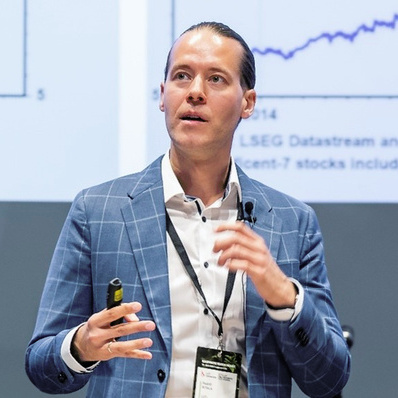
Prof Paavo Ritala
Paavo Ritala is a Professor of Strategy and Innovation at the Business School of LUT University, Finland. His research focuses on ecosystems and platforms, the role of data, algorithms, and digital technologies in organizations, and the circular and regenerative economy. His work has appeared in leading journals including Journal of Management, Journal of Management Studies, Research Policy, and Academy of Management Perspectives. He is a Clarivate Highly Cited Researcher 2025 in the cross-field category.
Beyond academic research, he works closely with industry through collaborative research projects, executive and professional education, and as a speaker and advisor. His recent work examines how data, artificial intelligence, and digital platforms are reshaping industries and professional work. Prof. Ritala is Co-Editor-in-Chief of R&D Management and serves on the editorial review boards of the Journal of Product Innovation Management and Organization & Environment.
More info via Paavo’s profiles: Google Scholar | LinkedIn
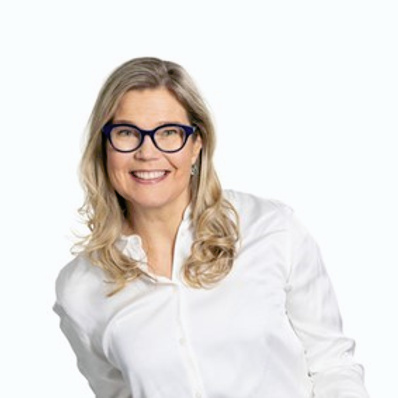
Sari Kola
Sari Kola is a global citizen with a thorough experience in managing people, business and innovation in ecosystems like EnergySampo, in companies like Nokia, Elisa and KONE and through consulting and advisory experience in multiple industries. She is passionate about building new business and creating high performing teams across organizational boundaries. Her first doctorate (LUT, 2005) relates to strategic innovation management and the second doctorate (UTU, 2025) titled “The Power of We” brings new insight and tools in solving systemic problems and creating and capturing value in inter-organizational multi-party collaboration, a theme that is addressed in the Ecosystem Handbook (2020).
Sari is industry agnostic and business model enthusiastic. She is a thinker and doer who enjoys collaborative problem solving in diverse cross-functional teams. Her superpower is combining various sources of information and developing crisp and focused strategies that are easy to understand and deploy.
Dr Gary Walpole
Dr Gary Walpole is Co-Director of the Regional Innovation & Regeneration Centre at Cardiff Met and Director of the award winning Circular Economy Innovation Communities (CEIC) project.
The award winning CEIC project has created a circular economy ecosystem across South Wales through regional collaborative innovation networks in the form of programme communities of practice to support organisations to develop new service solutions that implemented Circular Economy (CE) principles. CEIC has developed 385 professionals’ innovation knowledge and skills from 256 organisations across Wales. The participants have reduced costs and their carbon footprint, saving an average of 230,141 tCO2 and £190,991 per annum, outlined within video case studies.
He has thirty years’ experience in business and education, with twenty-five designing and delivering innovation and leadership programmes for Higher Education Institutions. Gary is a strategic organization development practical academic with an outstanding record of conceptualizing and leading multi-partner, multi-million-pound projects. He has in-depth knowledge and skills of designing and delivering Circular Economy, innovation and leadership programmes that develop organisations, facilitate change and enhance productivity. He has published widely on leadership, innovation and organisational development.

Laurynas Virbickas
Laurynas Virbickas is the Director of the Kaunas Regional Waste Management Centre in Lithuania, a regional public organization established by municipalities of the Kaunas region.
As the head of the Centre, he works with regional authorities to support cooperation in the development and operation of the municipal waste management system, ensuring that all municipal waste is managed properly and on time.
His professional activities focus on regional coordination, infrastructure development, and long-term system planning, with particular attention to the operation and further development of mechanical–biological treatment (MBT) facilities. Laurynas Virbickas also actively shares practical experience with professional and policy-oriented audiences and serves as Vice President of the Lithuanian Association of Regional Waste Management Centres.
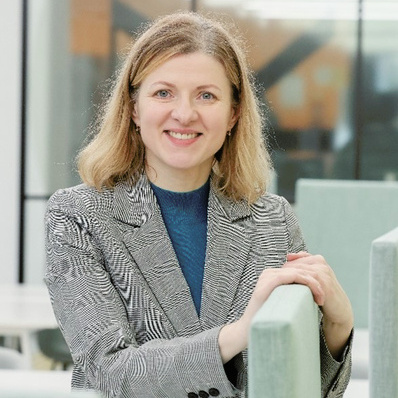
Prof Lina Dagilienė
Lina Dagilienė is a professor and the leader of the Circular Economy Research Group at the School of Economics and Business at KTU. Her research interests include the circular transition, corporate sustainability, inter-organisational tensions, circular business models, digital circular platforms and sustainability reporting.
She has authored numerous articles on these topics, which have appeared in journals such as Organization and Environment, Business Strategy and the Environment, Journal of Industrial Ecology, Sustainability, Accounting, Policy and Management Journal. She led the CD-TOOL project, which aimed to develop digital tools to help entrepreneurs create circular products and services.
She is currently leading the CEPOC project, which examines the inter-organisational tensions that arise when value chains and organisations transform into circular ones. She is also involved in developing circular city-region living labs (CiRLabs) as part of the ECLECTIC project.

Declan Lee Merion
Declan Lee Merion is Sustainability Manager at Bluestone Pembrokeshire National Park resort. His role has a focus on Circular Economy innovation and development. Declan is an associate member of the Institute for Sustainability and Environmental Professionals, and has twenty years’ experience within the Outdoor Learning and Adventure Tourism sectors. He is also a full member of the Association of Mountaineering Instructors (AMI).
Chaired by
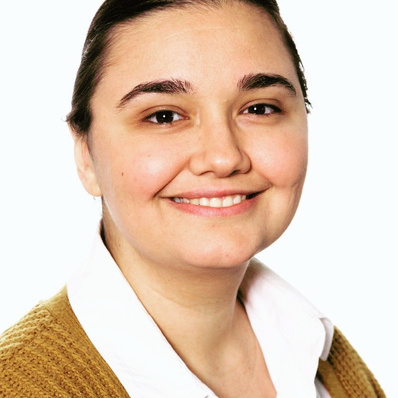
Dr Tulin Dzhengiz
Dr Tulin Dzhengiz is a Senior Lecturer in Sustainability in the Department of Strategy, Enterprise and Sustainability at Manchester Metropolitan University, where she joined in November 2022. Prior to MMU, she was a postdoctoral researcher at Aalto University School of Business (Finland), where she worked on the Finix project and researched innovation ecosystems and industrial clusters contributing to circular economy and sustainability.
She completed her doctoral training at Alliance Manchester Business School, University of Manchester, examining partnerships and strategic alliances in corporate sustainability and their contribution to the Sustainable Development Goals. Tulin is the Principal Investigator of the BAM/SAMS-funded ORCHESTRATE project, which explores circular textile and fashion ecosystems and their societal implications.
She is also a Co-Investigator on the ESRC-funded Place-Based Circular Society Innovations project, and serves as Academic Supervisor on an Innovate UK-funded project focused on circular business model implementation with an industry partner in the rug sector. Previously, she led research on the informal circular economy in Turkey, including waste collection and recycling networks, trading practices, and the dynamics of local clusters.
She has published in journals including the International Journal of Management Reviews, Business Strategy and the Environment, the Journal of Business Ethics, and Business and Society, R&D Management.
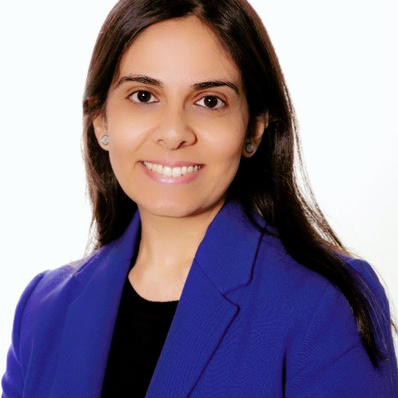
Dr Alaa Abed
Dr Alaa Abed is a Lecturer in Innovation and Sustainability at Manchester Metropolitan University. Her research explores innovation and sustainability with a particular emphasis on R&D investment, the circular economy, ecosystems, and ESG principles. She specialises in the use of advanced quantitative methods to generate rigorous, data-driven insights in business and sustainability research. Her recent work has been published in the International Journal of Human Resource Management, European Management Review, and the Journal of Business Ethics.
Alaa is a Co-Investigator on the Orchestrating Sustainability project, which investigates the evolution of the UK’s circular fashion ecosystem and the dynamics of ecosystem orchestration. She is also engaged in several ongoing projects examining the drivers of R&D investment, and the intersection with corporate governance and the circular economy, Enhancing Environmental Competencies in Primary School Learners and the role of alternative proteins in sustainable futures.
Benefits of attending
- Knowledge on circular ecosystems;
- Practice-academic collaboration;
- Advancing theory and practice of circular ecosystems.
Contact
Please contact the BAM Office at [email protected] with any queries.
Event Fee
BAM Member: Free
BAM Non-Member: £60
If you are booking multiple paid events as a Non-Member, it may be cheaper for you to purchase a BAM Membership as nearly all BAM Events are free or at a discounted rate for Members.
For more information, please visit BAM Membership
Registration closes on 2nd March 2026 at 23:59 GMT.
Payment and Cancellation Policy
Payment for the event must be received before the start date of the event concerned. Access will not be permitted to the event if full payment has not been received.
Cancellations
-
Cancellations received within 14 days of booking your place on the event will receive a full refund.
-
Cancellations received after the 14-day cancellation period and later than 14 days before the start date of the event will not be eligible for a refund.
-
Although we endeavour to run all events as advertised, BAM reserves the right to cancel any event if, for example, there are not enough people to justify running the event or if other significant unforeseen circumstances arise.
To cancel a booking a cancellation request must be submitted via your BAM Account, to do this:
- Go to your BAM Account
- Click 'My Events'
- Under 'Upcoming Events' will be the booking, please click Cancel Booking
- Follow the steps and complete the request