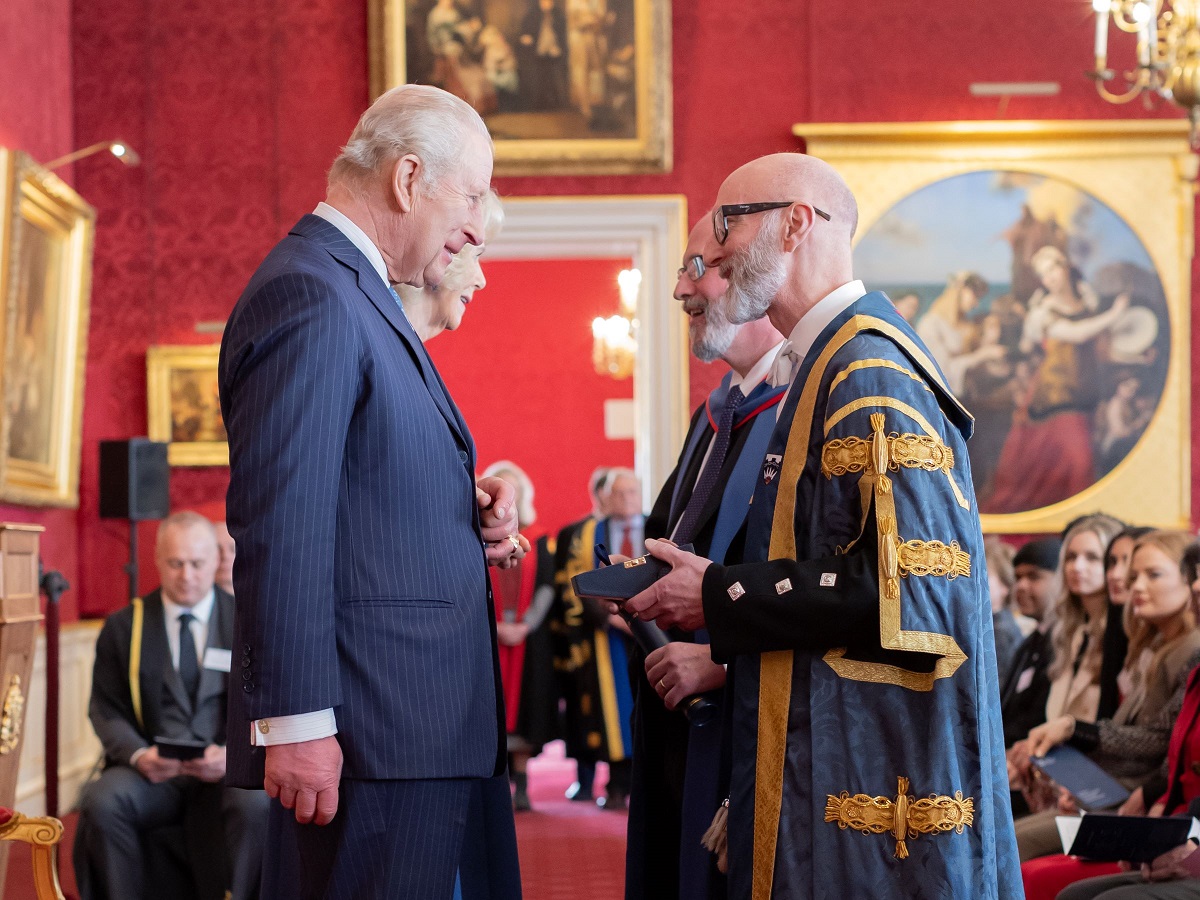
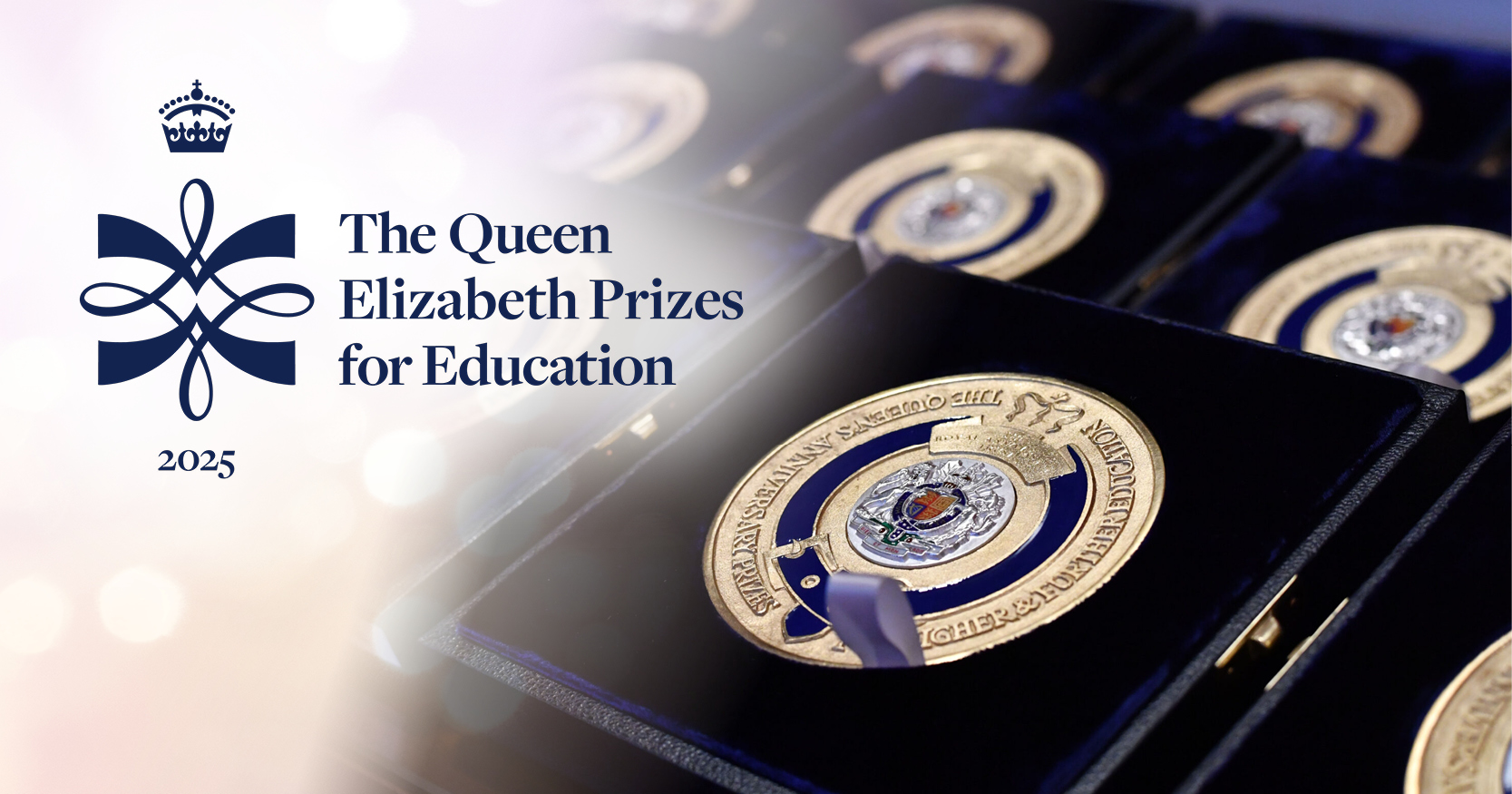
At a time when the role of business schools in shaping sustainable futures has never been more urgent, the recent award of the Queen Elizabeth Prize for Education to the University of Salford offers a powerful signal of what purposeful, values-driven leadership can achieve. This recognition, conferred by Their Majesties The King and Queen, marks not only an institutional milestone, but a culmination of a sustained strategic vision under the leadership of our Vice-Chancellor, Nic Beech.
For colleagues across the British Academy of Management community, Nic’s leadership will be familiar. As a former Chair and President of BAM, he has consistently championed the role of business and management scholarship in addressing grand societal challenges. At Salford, this commitment has translated into a coherent institutional strategy that brings together education, research and civic engagement around the shared goal of inclusive, sustainable prosperity.
The Queen Elizabeth Prize recognises more than excellence in education; it recognises a model of education that is deeply embedded in real-world impact. Nowhere is this more evident than in the work of Salford Business School, where the principles of responsible management education are not treated as an adjunct, but as a core organising logic of the curriculum. Our work as a signatory to the UN Principles for Responsible Management Education reflects a deliberate shift from teaching about sustainability to embedding sustainability as a lived capability for all graduates.
A recent example of this approach is the integration of Carbon Literacy across all postgraduate programmes. Rather than isolating sustainability within specialist modules, Salford Business School has embedded climate competence across disciplines, from leadership and strategy to operations and digital innovation. This ensures that every graduate leaves not only with knowledge of sustainability challenges, but with the practical capacity to act on them. As the PRME submission demonstrates, this curriculum innovation has already reached hundreds of students and staff, significantly improving climate knowledge, confidence and behavioural commitment .
This work speaks directly to the agenda advanced by Responsible Research in Business and Management. The RRBM community has long argued that business schools must move beyond narrow conceptions of academic excellence towards research and education that produce credible and useful knowledge for society. At Salford, this is not an abstract aspiration. It is operationalised through curriculum design, pedagogical innovation and partnerships with regional and global stakeholders.
It also aligns closely with BAM’s own strategy on Sustainable Futures. As a community, we have recognised that the climate crisis, social inequality and digital transformation demand new forms of knowledge, new pedagogies and new institutional commitments. The Salford example illustrates what it looks like when these commitments are taken seriously at scale: when sustainability is not a theme, but a thread that runs through the entirety of the business school.
There is, of course, much still to do. The transition to net zero, the reconfiguration of global supply chains, and the ethical governance of digital technologies all require sustained intellectual and institutional effort. But the Queen Elizabeth Prize provides a moment to recognise progress, and to reaffirm the role of business and management education in shaping moral and sustainable markets.
As BAM continues to advance its Sustainable Futures agenda, the challenge for all of us is clear. We must move from pockets of excellence to systemic transformation. Under Nic Beech’s leadership, the University of Salford offers one compelling example of how that transformation can be realised in practice.